This week's prompt is "Favorite Photo." Our first favorite photo is the wedding photo of my great grandparents, George Henrickson and Malvina Anderson.
Sunday, February 8, 2026
Favorite Photo
Saturday, July 12, 2025
Travel
This week's prompt is "Travel." I thought I would write about what it was like to travel to America during the 1800's.
Prior to around 1860, our ancestors would have sailed to America on a ship with sails. It would have taken around 4-6 weeks to arrive. They would have been in steerage, which meant they were crammed in with everyone else and had little to no privacy. Cholera and Typhoid were common, not to mention sea sickness. Food and hygiene were bad. It was not a pleasant experience at all. This changed somewhat with the introduction of steam powered ships. Steamships could make the journey across the Atlantic in 2-3 weeks. The living conditions were also a bit better. The first ancestors to come to America on a steamship were Carl and Ulrika Anderson.
Carl and Ulrika left Goteborg, Sweden on a Friday afternoon and arrived in Hull, England on a Sunday afternoon. This was traditionally how sailings went. Leave on a Friday and arrive on Sunday. The journey took around 40-50 hours. They would have needed to be in Goteborg a week before sailing to meet with the ticket agent from the company and go through all the paperwork. They would have needed paperwork from their parish saying where they were leaving from, and where they were heading to. Hull was the major port for arrivals of emigrants traveling to America from northern Europe. After arriving in Hull Carl and Ulrika would have stayed onboard their ship until the train was ready to take them to Liverpool. The train usually left on Monday morning around 11 am and arrived in Liverpool around 3 pm. There were no bathroom facilities onboard the train. At least not for 3rd class passengers. In Liverpool they would stay until they could board the ship taking them to America. I'm not sure how long they would have stayed in Liverpool.
Traveling 3rd class, or "Steerage", was not easy. Passengers would be provided with a place to sleep and food. Passengers had to provide their own mattress and bedding. Also, their own plate, mug, knife, fork, spoon, and water can. They were also advised to make sure they had a good selection of clothes as clothes were more expensive in America. All of these items could be found in Liverpool for sale. Gunpowder was prohibited. Weapons needed to be left with the captain and crew for safe keeping. Valuables were also supposed to be left with the captain or ship's purser.
Food was served by the crew. It probably sounds better than it actually was. Passengers would be served tea and coffee, bread and gruel, soup, beef, pork, fish and potatoes. They were allowed 10-20 cubic feet for luggage.
Passengers were also separated by families, single men, single women. The single men and women would be separated with families in-between them.
After arriving in New York, 1st and 2nd class passengers were allowed to leave the ship. They were seen as more trustworthy. Steerage passengers had to remain on ship until it was time for inspection. They would be given a 6 second once over by a doctor, asked a few questions, and as long as they weren't sick or proclaimed themself an anarchist, they were allowed entry. Anyone could buy a ticket and sail to America to start over.
Carl and Wilhemina Strandt sailed to America in late 1871. They sailed from Hamburg. By the time they arrived in Hull, Hull had built a large waiting room at the train station for the emigrants waiting for the Liverpool train. The waiting room had bathroom facilities, a place to wash up, and a chance to meet with the ticket agents. It was also shelter from the weather. Their passage to America would have been similar to Carl and Ulrika's passage. Crowded conditions in steerage, basic food, and they would have needed to pack their own bedding and cutlery.
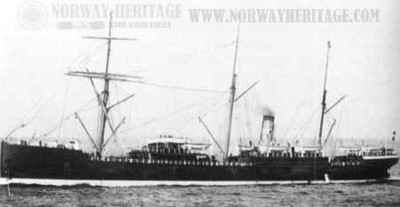
When Sven G. H. Johansson "George Henrickson" came to America in 1892, things had improved somewhat. He traveled on the Thingvalla line. His ticket had been bought in America by one of his uncles. The ships in this line were owned and operated by Scandinavians. The crew were all Scandinavian. They promised a quick, low-cost journey to America. The below is taken from the site A Thingvalla Line promotional pamphlet 1887
Is divided into different departments for families, for unmarried males and for unmarried females. Order and cleanliness is provided by crew specially employed for the task. The food is fresh and rich, made of first class food supplies. It is handed out in such rich portions, so it should not be necessary for the passengers to bring any additional food supplies for the voyage to New York The food is served to the passengers by stewards, thus on other steamship lines the passengers usually have to pick up their food at the galley, which of course will be unpleasant in bad weather.
The meals consist of:
Breakfast: Coffee with sugar, bread or biscuits with butter
Dinner: Beef and soup with potatoes and bread. Fish, clipfish with souse and fruit soup, Lobescauce? and Rice soup, varying through the week days.
Evening: Tea with sugar, bread and butter
Everyone gets as much to eat as desired. To the male passengers who desires, it is served every morning one dram of liquor. There are also rich supplies of water. There are bakeries on the ships, where fresh bread is baked every day. The between deck (steerage) is high, light and spacey, and is heated in the cold part of the year. Mothers of infants will receive milk or vrilfood free of charge.
George would have arrived at Ellis Island, where once again as a passenger in steerage, he would have had to wait to pass customs and inspection before being admitted into the country. It normally took around 5 hours.
A couple of final things about Thingvalla lines, they gave out tokens for luggage. When you arrived at your final destination, you exchanged your token for your luggage. Much like a luggage tag on checked suitcases today. Also, they were the only line that promised a direct route to America from Scandinavia. George sailed from Malmo, Sweden to Lubeck, Germany. Then, took the train to Copenhagen and sailed direct to America from Denmark, completely bypassing England.
Ingrid Fahna, George's mother, came to America in 1912. She was able to sail on the Lusitania. She sailed 3rd class, but by that time things had improved immeasurably for 3rd class passengers. She didn't have to supply anything and had much better sleeping and eating conditions. Her ship also sailed the fastest. She crossed the Atlantic in 10 days, whereas others took an average of 2 weeks.
Researching these companies, they reminded me of airlines today. Steerage is now Economy. 2nd Class is Business, and First Class is still First Class. Thingvalla would be the low-cost Spirit or Frontier airlines of today. They all promised to get you to America. The only difference is how much you were willing to pay.
Another thing, many of these companies crammed as many passengers as they could onto their ships. There were complaints about the food, conditions and safety of many of these ships bringing emigrants to America. While researching I found an undercover report that the American government did on a ship. They sent a woman investigator undercover in the late 1800's to see what the conditions were like. She found poor food, poor sanitary conditions, instances of sexual harassment and emigrants being treated more like cattle than human beings. The governments of the United States, England, and others would put regulations and restrictions on the companies. As the undercover report showed though, they weren't always followed.
These are the websites I used to write this blog.
Journey In Steerage from Northern Europe - 1871 | GG Archives
A Thingvalla Line promotional pamphlet 1887
Migration from Northern Europe to America via the Port of Hull, 1848-1914
Questions, comments, additional information? Let me know down below or email me. Please feel free to share and post with others who may be interested.
Image of Hekla steamship that George Henrickson sailed on to America from Copenhagen, Denmark.
Saturday, February 1, 2025
Challenge
This week the prompt is "challenge" so I am keeping up with my own challenge of recording the births, deaths, and marriages of each month. February is the shortest month and as a result I didn't find that many results for February.
Births in February include:
Marvin Henrickson, born on Feb. 11, 1944.
2x great grandfather William Strandt, born on Feb. 15, 1876. (Chicago, Illinois)
Gary Thompson, born on Feb. 20, 1949.
3x Great grandmother Wilhelmina Gley Strandt was born on Feb. 21, 1841, Prussia (Germany)
Paternal 2x great grandmother Mary Bellegraph born on Feb. 26, 1869 in Pomerania (Poland)
Marriages
Despite being the month of Valentine's Day, February only contains two marriages.
Great grandparents George Henrickson and Malvina Anderson were wed on February 21, 1900.
Paternal 2x great grandparents Mary Bellegraph and Joannes "John" Knach Conors were wed on February 7, 1888 in Indiana.
Deaths
Great granduncle Frank Anderson (older brother of Malvina Henrickson) died on February 5, 1939.
Paternal 3x Great grandmother Abigail Eldred died on Feb. 9, 1847.
Marvin Henrickson and 2x Great grandmother Elnora Truman Bellinger both died on Feb. 28. 2005, and 1953 respectively.
That's for this month. Not a lot happening in February. March will be completely different. Just the number of birthdays to keep up with. April, too! :)
Feel free to add additional birthdays, deaths, and marriages in the comments below. I try not to go back too many generations, or, go too much into extended family.
![]() |
| Mary Bellegraph and John Knach Conors Wedding day 1888. |
![]() |
| George Henrickson and Malvina Anderson Wedding Day 1900. |
Unless noted, births, deaths, and marriages occurred in Michigan. If they occurred in another state, or in "the Old Country" I tried to note it, if available.
Monday, August 5, 2024
Hjalmar Rudolph Anderson (1890-1970)
This week we're looking at the life of Hjalmar Rudolph Anderson, husband to Selma Henrickson, and son in-law of George and Malvina Henrickson.
Hjalmar Rudolph Anderson was born February 4, 1890, in Grand Rapids, Michigan. His father was Carl Johan Anderson, NOT to be confused with the Carl Johan Anderson who was Selma's grandfather. I told you Sweden liked to use the same names over and over. That's what makes researching Swedish ancestors so hard, everyone has the same 2 or 3 names! :) Carl was from Ostergotland in Sweden and arrived in 1881 at the age of 33, per church records. Hjalmar's mother was Vendla Maria Peterson. Interesting fact, she came from Slatthogg parish, Kronoberg, Sweden. The same parish that George Henrickson and his family came from. Vendla arrived in America in 1886 at the age of 23. On October 30, 1886, Vendla and Carl married and set up housekeeping in Grand Rapids, Michigan. Carl listed as working in furniture as his occupation. Vendla put down "shop" as her occupation.
Thier first son, Harry Rickard Anderson, was born May 10, 1887. Harry's birthday may give us a clue as to why Carl and Vendla wed so soon. Harry's birth was followed by Hjalmar's on February 4, 1890. Daughter Lillie Victoria was born December 4, 1895. Son Rugner Melvin Theodore was born December 29, 1897. Daughter Agda Regina was born July 31, 1899.
I have been unable to find the family in the 1900 Federal Census. I have searched independently for all the family members. No hits come up. The names may be spelled differently, and that's why no hits are coming up, or perhaps they just missed the census taker? Either way, life was not easy for Hjalmar's family. On April 9, 1900, both Vendla and youngest child Agda come under doctor's care. Vendla is suffering from consumption and General Marasmus. Consumption is known today as Tuberculosis. General Marasmus is severe malnutrition. One's body is not getting enough protein, calories, vitamins or minerals to survive. It is a wasting away. Baby Agda is also suffering from General Marasmus and Scrofula. Scrofula is an infection of the lymph nodes on the neck. It is usually associated with tuberculosis. It was also known once as the King's evil. Lesions and abscesses grow on the neck. They are painless but can grow quite big. It's accompanied by fever, chills, malaise and weight loss. This is 1900 and there are no antibiotics available. Tuberculosis seems to be the main cause of death. The immediate cause of death for both was General Marasmus. There was little the doctors could do for them. On May 8, 1900, Agda passed away. She was 10 months old. On May 15, Vendla passed away. She was only 36. Hjalmar was 10 years old. On Vendla's death certificate it was listed that Vendla was the parent of 7 children, of whom 4 were still alive. Agda had just passed away, so that means she and Carl had 2 other children pass away in infancy, or miscarried.
In the 1910 Federal Census we find Hjalmar working and living at the Michigan Asylum for the Insane in Kalamazoo, Michigan. It was one of the largest employers in the area at the time. There is also a Lillie Anderson working there. She's 18. Hjalmar's sister, Lillie, would have been 15, but it wasn't uncommon for people to fib about their age to get jobs or get married.
The next mention of Hjalmar is from June 1916. In a newspaper mention about the Swedish residents of Watson celebrating Midsummer. Hjalmar joined George Henrickson, William and Charles Sandahl in singing 2 Swedish songs. Hjalmar was 26 and Selma was 16.
The 1920 Federal Census finds Hjalmar living and working on Nels Nelson's farm in Watson township as a Laborer. Helping Nels out with farm chores.
On June 2, 1923, Hjalmar Anderson, farmer from Otsego, Michigan married Selma Henrickson, teacher from Allegan, Michigan. Hjalmar was 33 and Selma was 22. Selma's sister Eulalia and her cousin Russell Anderson (no relation to Hjalmar) were witnesses.
Their daughter, Arlene Eulalia, was born March 8, 1927. Son Victor Hjalmar was born August 11, 1930.
The 1930 Federal Census finds Hjalmar and Selma living in Allegan. Hjalmar's occupation is now a salesman in a hardware store. They don't have a radio.
The 1940 Federal Census tells us that Hjalmar is still working in a hardware store as a salesman. He made $1000 a year. The house was rented, and 8th grade was the highest grade he attended. Selma had attended 1st year of college. An 8th grade education was pretty common in 1940.
In 1942 Hjalmar registered for the draft. This tells us that Hjalmar was 5'7" tall, and weighed 150 pounds. He had blonde hair and blue eyes with a ruddy complexion. His employer is The Grange Store. Interestingly, for person who will always know your address, he put down Carl Henrickson, his brother in-law. I usually see a wife, mother, or immediate family member put down. Hjalmar must've felt pretty close to Carl to list him.
The 1950 Federal Census finds Hjalmar and Selma have moved to an apartment and Hjalmar is now working as an inspector for Blood Brothers Machine Co.
Hjalmar passed away April 21, 1970 at the age of 80.
Earlier I said I couldn't find any mention of Hjalmar's family in the 1900 census. I "may" have found Hjalmar. In looking at Nels Nelson's family I researched him. In the 1900 census he and his wife Charlotte had a "John Anderson", born in Feb. 1890, in Michigan, living with them. The census was taken in June 1900. Could Hjalmar be "John"? Nels came to America from Sweden in 1881. The same year as Hjalmar's father. Maybe they immigrated together? Charlotte was also a Swedish immigrant. Perhaps when they said "Hjalmar" the census taker heard "John". Since Hjalmar lived with Nels and Charlotte later I think the odds are pretty good that the 10 year old boy boarding with Nels and Charlotte was Hjalmar. Especially with his mother dead. It would be difficult for his father to take care of the children. How Hjalmar got from Grand Rapids to Watson we'll probably never know, but it does speak to the kindness and generosity of Nels and Charlotte Nelson to take in Hjalmar.
Hjalmar's older brother Harry married twice, divorced once. Worked for the railroad company and doesn't show up in any census records until 1940. He passed away in November 2, 1964 in Missouri. I don't think he had any children.
Older sister Lillie is a mystery. I did find a Lillie Anderson, born in Oct. 1895, living as a boarder with a Swedish couple in Grand Rapids in 1900. Lillie was born in Dec. 1895 but maybe the birthday was recorded wrong. I've seen that before. With no other identifying information, whatever became of Lillie is an unknown mystery.
Younger brother Rugner is found in the 1910 census living as a Boarder with another Swedish family. His World War I draft card lists his father as nearest relative. Carl is living in the Tuberculosis Sanitarium in Grand Rapids, Michigan. Carl will die in 1919, also of Tuberculosis. Rugner works as a Riveter. He describes himself as short, slender, with light hair and grey eyes. He also says his left hip is crippled and he wears crutches. On his WW II draft card, he gives his height at 5' and weight as 83 pounds. He also lists a hearing defect and says he is lame. He is employed at R.C. Allen calculator. After the 1920 census I cannot find anymore census entries for him. He IS listed in the Grand Rapids city directories. He seems to remain gainfully employed. I can't find any record of marriage or children for him. He passed away June 8, 1971.
The death of Hjalmar's mother and sister dealt the family a major blow. Fortunately, the Swedish community seemed to come together to take the children in and give them a shot at a better life. Nels and Charlotte Nelson took Hjalmar in and gave him that chance at a better life. Hjalmar married, found employment, and raised 2 children. He was able to give his children a better life than he had.
![]() |
| Thank goodness for the U.S. Lutheran Church keeping such good records. Without church records I could never have pieced together Hjalmar's family with his parents. |
Wednesday, July 17, 2024
Trains
"Trains" is the next prompt. Trains have played a very important part in the lives of our ancestors. Trains brought them where they wanted to go, and often provided means of employment. Trains also brought tragedy on occasion.
![]() |
| Moheda train station |
![]() |
| Rotebro train station |
On the Strand side, Carl and Mildred Strand used trains as transportation. When Mildred was a young girl, her older brother Ray spent a summer crisscrossing the American west in search of their Uncle Judson. Ray took trains from Allegan all the way to Washington, sending postcards home from the places he stopped at along the way. He told the family to follow along with the train schedules to know when and where he was arriving. He traveled all over with no car, just using trains.
When Mildred, herself, was older, she used the train to meet Carl where he was working, in Battle Creek, I believe. Mildred had never learned to drive a car and Carl had her take the train to meet him. There was an interurban line in Allegan that quickly transported people from Allegan to Kalamazoo, Battle Creek and Grand Rapids. It was cheap, fast, and electric.
Trains helped our ancestors travel to faraway places to start new lives and visit far flung family members. Trains also helped our farmer ancestors sell their grains and crops and bring in goods not readily available in Michigan.
Do you have any more stories about trains and how the impact they had on our family's life?
Postcards courtesy of FindaSwede. She has more information on where the postcards came from.
Also thanks to "Railroads Come and Go in Allegan County" by James J. Green. Allegan County Historical Society Publication. 1976.
Tuesday, June 11, 2024
Health and the Henricksons
The prompt for last week was "health." I thought it'd be interesting to take a look at the general health of our ancestors. Knowing the health history of a family can help people be aware of certain conditions and know what to look out for. This post will look at the Henrickson side of the family.
My grandfather, Raymond Henrickson, was the 9th born child of the 12 children born to George and Malvina Henrickson. Of the 12 children, 11 lived to adulthood. The youngest child, Victor, was born March 10, 1921 and passed away on January 3, 1923. The death certificate states that cause of death was tuberculous meningitis and he had been treated for it for 6 days. From December 23, 1922 to January 2, 1923. Today it can be treated with drugs and medicine not available in 1923.
The next sibling to die was Evald Henrickson. He was born in 1911 and passed away in 1951. I haven't found a documented cause of death, but my mom said she thought he had kidney trouble. He was only 39 years old. Grace Henrickson Wall passed away in 1957 at the age of 52. Ingrid passed away in 1964. Neither had any children. Both are reported to have passed away from cancer. It's not known what type of cancer. Oldest son, Sidney, passed away in 1965. He died in a Veteran's hospital. His cause of death is unknown too. He was 63 when he passed away.
Aside from these early deaths, the other Henrickson siblings led relatively long lives. Selma and Eulalia lived to 85. Pearl was 89. Carl was 70. Esther lived to 78. Elvera lived to 91, and Raymond lived the longest of all. He passed away at the age of 93. I remember Grandpa saying he was glad to have lived longer than his mother.
Going back a generation, let's look at George and Malvina Henrickson.
George Henrickson was born in 1875 and died in 1941 at the age of 66. His cause of death was Pernicious Anemia. Pernicious Anemia is an autoimmune disorder where the body is unable to absorb B12. Being unable to absorb B12 then leads to many more complications, the most important being the body's inability to make red blood cells. According to George's death certificate, he was treated for the condition for 5 years. There is still no cure for this disease, but it is treated with taking vitamin B12 shots, or orally. It is not a common disease, occurs mostly in older adults over the age of 60, in women, and in people of northern European/Scandinavian descent. People with pernicious anemia are also more likely to develop or have other autoimmune conditions, such as Type 1 Diabetes, Vitiligo, and Autoimmune Thyroid Disease. I remember Grandpa telling me about his father's condition. George had said it felt like he had cats in his chest, clawing to get out. Some of the symptoms include rapid pulse, tingling of the skin, abdominal bloating, rapid weight loss, weakness in the arms and legs, shortness of breath, and pale skin.
By contrast, Malvina Anderson Henrickson was born in 1879 and passed away in 1964. She gave birth to 12 children. Little is known about her because she generally kept to herself, despite living with Ray and his family. The children were instructed to leave her alone and not bother her. She may have had some bladder control problems in her older years, but that wouldn't be unusual after carrying 12 children to term. She was 84 years old when she passed away.
George Henrickson outlived both his sisters. One sister passed away at the age of 2 and his younger sister passed away at the age of 63 following an illness of several months, according to a newspaper article.
George's parents also lived pretty long lives, for the times. George's father, Johan, passed away at the age of 76 from heart disease. His mother Ingrid passed away at the age of 81, apparently from natural causes. Interestingly, Ingrid was also the longest-lived sibling out of her family. Her sister Amanda died at age 48. She's reported to have been sick most of her life. Her other sister, Sara lived to 73. She suffered from Rheumatoid Arthritis. Brothers Jonas and Anders lived to 80 and 71, respectively. Rheumatoid arthritis is another autoimmune disorder. Amanda was always labeled ill or sick in the Household Examination books. I'm going to guess she may have had an autoimmune condition too. Another interesting fact is that Kajsa Jonasdotter, the mother of Ingrid, was noted to have a crippled hand, even as a younger woman. I'm wondering if she also suffered from RA? There definitely seems to be more autoimmune conditions from this branch of the family tree.
Swinging back to Malvina's family, Malvina also lived longer than both of her siblings. Her older brother Frank passed away at the age of 65 in 1939 from bronchial pneumonia, with Shingles also listed as present at time of death. Malvina's younger sister, Selma, also died in 1939, at the age of 56. Her death certificate lists Natural Heart Failure.
Malvina's parents also have heart disease listed as their causes of death too. Father, Carl Anderson, passed away at the age of 74 in 1915. The doctor wrote that Carl had been out working on the farm earlier in the day, came in and called for the doctor, but was dead before the doctor arrived. It was noted he had been treated previously for heart disease. Malvina's mother, Ulrika, passed away in 1918 at the age of 78. Her death certificate notes that she had been treated for chronic endocarditis before her death.
It is possible to go back even further in Sweden with causes of death. The two main causes of death were either from a sickness, usually pneumonia, or if the person was older, it was usually listed as heart disease.
So there you have it, the health history of the Henrickson family, going back to the 19th century in Sweden. I'm working on another post for the Strand and Bellinger families.
Questions, comments, or have more information to share? Post below or email me. Feel free to share this post with others. I'm always looking for more relatives to add.
Saturday, May 18, 2024
Nicknames: How did Ulrika become Hilda?
The prompt for this week is "nicknames." It made me think of my great, great grandmother Ulrika Johannesdotter Anderson. Her given name was Ulrika and that is what she is known by in all Swedish records found on her. She is also known as Ulrika in early documentation in America and in the Swedish Lutheran Church records kept in America. Sometime around 1910, though, she acquired the nickname "Hilda/Hulda." I have found records past 1910 referring to her as Hilda and there is one record that refers to her as Hulda. Why did this occur? Let's find out.
Ulrika was born March 24, 1840 to Johannes Pehrsson and Britta Carlsdotter. The name "Ulrika" means "wealthy ruler" and comes from Old High German. It's the feminized form of Ulric. Two queens in Sweden were named Ulrika and it was popular in literature in the 19th century. There were characters named Ulrika in "Ivanhoe" and "Count Robert of Paris."
The record shows that Ulrika was the only name given to her. She had no second name given. She was simply called Ulrika. All of the records in Sweden, household examination, marriage, and passenger immigration lists, all list her name as Ulrika. Hilda or Hulda is never used with her.
When she comes to America, the first U.S. Federal census she's recorded in, 1880, lists her name as "Eureka." To English ears, hearing the name Ulrika pronounced the Swedish way, it would sound very close to 'eureka" She and Carl had only been in the US 10 years by that point. It's also noted that neither she nor Carl could read or write in English. However, by the 1900 Federal census, she is listed under her proper name of Ulrika, even though it is spelled "Uhrick." The local Swedish Lutheran church lists her name as Ulrika. Again, no other name given.
The 1910 Federal census is where we find Ulrika listed as "Hilda." She and Carl can both read and write English at this point too. After 1910 we see Hilda used to refer to Ulrika in documents, especially in documents also referencing her oldest son, Frank, and youngest daughter, Selma. In the marriage records for both Frank and Selma, she is referred to as Hulda/Hilda Anderson. Interestingly, in the marriage record for Malvena, she is listed by her Swedish name, Ulrika. When Ulrika dies, her death certificate was filled out with information provided by oldest son, Frank. She is listed as Hilda Anderson. "Ulrika" is then listed next to that name in parentheses, almost as an afterthought. When Frank passes away, his mother's name is listed as Hilda. Daughter Selma also passes away soon after, and Hilda is listed as her mother's name. I haven't found Malvena's death certificate yet, but I have a feeling I'd find the name Ulrika listed.
The name "Hilda" comes from the Old Norse word hildr, which was the name of a Valkyrie who carried fallen warriors to Valhalla. Hilda means "battle or battle woman." It's a name of strength. Since the name Hilda is never used in Swedish, it must've been a nickname given to her in America, but why? Was it to differentiate her from another Ulrika? Or perhaps it was given to her because of her personality? We know Ulrika was orphaned by the time she was 7, lost a child in Sweden, lost another child who was killed by a train in Michigan. With all the tragedies in her life, maybe her friends and family wanted to honor her? Or, maybe they just preferred it to Hilda and found it easier to pronounce than Ulrika? Her husband Carl was known as Charles after coming to America. Maybe Ulrika wanted a new name too?
Saturday, March 16, 2024
Radio: Yes or No? Technology in the 1930's
In the 1930 United States Federal Census a question was asked if respondents had a radio. It was the first time a consumer question had been asked on the census. Radio had been introduced earlier and was increasingly becoming a popular way of obtaining news, entertainment and a way of selling items to consumers. If anyone in the household owned a radio set, an "R" was placed next to the family name in box 9. I decided to look into it and see how many of our ancestors had a radio in 1930.
First up is George and Malvina Henrickson.
Saturday, January 13, 2024
Origins: Smaland and Skaraborg, Sweden
This week's prompt is "Origins." The origins for the George and Malvina Henrickson clan are in two areas of Sweden, Smaland and Vastra Gotaland.
Smaland is a province made up of 3 counties: Kronoberg, Kalmar, and Jonkoping. George Henrickson's paternal and maternal lines both go back in Kronoberg County until at least the late 1700's. Carl Anderson, father of Malvina Anderson Henrickson, has paternal lines that go back through Jonkoping, and his mother's family stretch back through Kronoberg. Malvina's mother, Ulrika Johansdotter Anderson, has family from Vastra Gotaland, in western Sweden. She is the only one who does not have roots in Smaland.
Smaland is in southeastern Sweden. The name literally means, "small lands." It is an area filled with forests, many lakes, bogs, and stretches to the east coast of Sweden where it borders the Baltic Sea. While some of the land is used for agriculture, it can be very rocky and the soil isn't the best. The weather averages around 72'F in the summer for a high, and around 32'F in the winter.
The "small lands" names comes from the Middle Ages when each small province could declare itself neutral in Sweden's many wars. When the land south of Smaland was controlled by Denmark, and they would have conflicts and wars with Sweden, the provinces in Smaland could and would declare themselves neutral. They were so far from Stockholm that there wasn't much the King could do. This lasted until 1350 when a national law code was introduced and the small provinces and towns lost their autonomy. The area was also the scene of several peasant rebellions.
In the 1800's Smaland was affected by famine, and had high levels of poverty. The many social and economic problems led many residents to emigrate to America. Residents read about America, the land of opportunity and left Sweden for a better life, including ours.
Today Smaland is known as the birthplace of the founder of IKEA. The birthplace of Carl Linnaeus, the father of modern day taxonomy, and Astrid Lindgren, author of the Pippi Longstocking books. Smaland is also known for glass blowing and for the original red and white peppermint stick.
Vastra Gotaland was formed in 1998 when three counties were combined into one. They were Alvsborg, Goteborg och Bohus, and Skaraborg. Ulrika Johansdotter's family goes back to the early 1800's in Skaraborg County.
Skaraborg sits between lakes Vanern and Vattern. It has densely wooded forests and plains and a table rock landscape. I couldn't find much other information on Skaraborg.
The first map below shows were Skaraborg is located within Vastra Gotaland. The second map shows the area of Smaland. Underneath that is a link to a short 2 minute video that showcases the sights and sounds of Smaland.
Friday, December 8, 2023
You Wouldn't Believe It!
This week's prompt is "You wouldn't believe it." I've uncovered a lot of surprising things about my ancestors and relatives over the past few years. One of the facts that I really found surprising was when my mom told me that her father, Raymond Henrickson, had surprised her and her siblings by playing a bit of a tune on a piano one day. No one knew that he could even play the piano! I dug deeper into it.
Raymond Henrickson was the 9th child born to George and Malvina Henrickson. Ray most likely learned to play the piano from his parents. Both Malvina and George played the organ at the local Lutheran church. Malvina had even helped donate money, and traveled to Detroit, Michigan to bring back the first organ for the church. From Allegan to Detroit and back again with a horse and wagon. Ray wasn't the only child of theirs to play. Oldest daughter Selma also is listed in the church records as church organist for a time. I'm unsure if any other of Ray's siblings knew how to play the piano/organ, but I'm sure there must've been others.
After establishing where Ray and his siblings learned to play the piano, the next question is how did George and Malvina learn to play? Malvina already knew how to play the organ when she met George. Her parents, Carl and Ulrika Anderson, had immigrated from Sweden. Carl was a farmer, as he had been in Sweden. Both came from poor families. Carl had worked at a railroad station and Ulrika had worked for many different families as a maid before they met and married. After marrying, Carl farmed. It seems unlikely either family had a piano. Ulrika's parents were both dead by the time she was 7. Perhaps she learned somewhere along the way from one of the families she worked for?
George Henrickson immigrated from Sweden as a 17-year-old boy. His family also was poor, but his maternal uncles were a bit better off. One immigrated to America in 1869 and became a successful farmer. Another one worked as a tailor in Sweden, and then in America. George also had a maternal aunt who worked as the local schoolteacher. It seems music and dancing seemed to be fun pastimes in his mother's family. I found this excerpt from a letter written by one of his sister's descendants:
Karl and Sven George Henrickson were handsome men, several of the Fahnstrom's and the Johnson's were good looking people, also musical and some loved to dance, guess that's something I inherited. Grandpa George and his sons played accordion by ear, Great Uncle Fred's sons, Wesley (Jack) Elmer (Unk) and Leslie (Pete) were very good and played accordion, guitar and banjo for dances.
Saturday, September 16, 2023
Adversity - The Swedish Famine of 1867/1868
The prompt for this week is "Adversity." Now, most of us are familiar with the Irish famine of 1845-1852 that led to the deaths of one million Irish citizens and was responsible for the large number of Irish immigrants in the mid 1800's. There was another famine in Europe that also had a direct impact on immigration to America.
The 1860's were not very kind to Sweden. Swedish farmers had numerous crop failures and it was a difficult time trying to harvest crops and grow enough food to feed family and farm animals. Times were hard. In 1867 times were going to get harder. Due to the weather patterns the winter of 1866-1867 was colder and lasted longer than normal. Spring came so late that farmers had to wait to sow seeds. The summer was very short lived and then Fall came. It became difficult to feed animals, and people. The price of food increased, making it tougher. The early arrival of ice and snow also made travel and communications throughout the land harder. All parts of Sweden were affected, but the northern parts of Sweden suffered the most. In southern Sweden, where Carl and Ulrika Andersson lived, the large farms were able to export their crops, but the smaller farmers, like Carl, had a harder time. In 1868, instead of cold and rainy weather, a drought occurred. No rain meant crops still couldn't be grown or harvested so the famine continued for another year. Little to no food for people or animals.
Fundraisers were held in America to help the Swedish famine victims and money was sent to Sweden. The Swedish government also sent money to the affected areas to help. However, local authorities would put their own restrictions on who was able to receive the money. People would have to agree to work, or supply labor, to receive the funds. Exceptions were made for people who physically couldn't work or the very old, but many people were turned away for aid if they couldn't say they could work for the funds. In turn, much of the relief money stayed with local authorities or went to wealthy and large farmers who could guarantee work for the funds. Famine victims were often told to eat bark bread. Bark bread is bread made from the inner bark of trees, and lichen. It's mixed with flour and gives the bread a greyish green appearance. The bread doesn't rise much and eating too much of it can cause vomiting and nausea, especially in children. The Swedish press criticized the distribution of the relief funds. Some felt that the lack of aid extended the suffering of the poor.
![]() |
| Swedish famine victim eating bark bread. |
Saturday, August 12, 2023
Skaverud: birthplace of Ulrika Johansdotter Anderson
This week Annika Hostmad, Swedish genealogist with "Find a Swede," sent me pictures she took when she traveled through Skaverud, the birthplace of Ulrika Johansdotter Anderson. She didn't know where the exact cottage that Ulrika had lived in was, but she was pretty sure that most of the buildings shown were there at the time Ulrika would have lived. She sent me several pictures of the small community. I was pleasantly surprised to see how much it reminded me of Michigan. The best part was seeing the cows in the pasture. :) Grandpa Henrickson would be so happy.
As a refresher, Skaverud is the homestead where Ulrika and her family lived. It's comprised of several small homes and farms. It's part of the Molltorp Parish. Molltorp is home to around 1,070 people according to the most recent census in Sweden. Molltorp is in the province of Vastergotland. Vastergotland means "the western part of the land of the Geats." The Geats were a northern Germanic tribe of people. They united with the Swedes to form the Sweden we know today. I'll write more about that later. I found it really interesting.
And without further ado, here are some of the pictures.
Saturday, July 22, 2023
In the newspaper
This week's prompt is "In the newspaper." I've been able to find out a lot about my various family members by searching the newspapers. Not only are newspapers great ways to find out about weddings and obituaries, but you can also find out if they ran for office, who they had Easter dinner with, or if they visited friends at Camp Custer. I have a subscription to Newspapers.com and that has been a tremendous help, especially with extended relatives who moved to other parts of the country. Unfortunately, the Allegan Gazette, and Allegan Journal have not been made a part of the Newspapers.com family. I did find a way, though. While searching the Allegan Library website one day I discovered that they had digitized the two newspapers and put them online. There was even a search engine! Unfortunately the search results just tell me which issue of the paper my relative may be in. It doesn't show me which article or highlight the name like Newspapers does. Nevertheless, it's been an invaluable tool in helping me research the Strands, Henricksons, Thompsons, and Ashleys.
For this prompt I went back and searched for Henrickson and popularly misspelled "Hendrickson" again to see what I could find.
We start with June 25, 1915. I've mentioned wanting to know if our Swedish ancestors observed Midsummer festivities in Michigan as they would have in Sweden. Well, I wonder no more. I found this article describing the Midsummer party hosted at the farm of Mr. and Mrs. George Hen(d)rickson.
![]() |
| Allegan Gazette June 25, 1915 |
Malvina's father, Charles, had passed away in March of 1915, so by June she and George were already living on the farm. This also shows that George must've had a good singing voice to be part of a group that performed. It also shows that Hjalmar Anderson was part of the social circle. Hjalmar would go on to marry oldest Henrickson daughter Selma.
The next article also concerns Hjalmar, and the Sandahl boys again. In November 1917 we find Hjalmar, Charlie Sandahl and friend Carl Peterson visiting William Sandahl and Martin Swanty at Camp Custer. William and Martin must've signed up to fight in World War I. Interestingly enough, in this same blurb, we also find Carl Strandt and his friend Gordon visiting a school. If that makes any kind of sense to anyone I'd love to know more. Maybe it's a school future wife Mildred Bellingar was teaching at?
![]() |
| Allegan Gazette November 1917 |
The next mention I find is the wedding of Grace Henrickson to Harold Wall in August 1928. The reception, once again, was held at the Henrickson family farm.
![]() |
| Allegan Gazette August 18, 1928 |
In the same issue, I also find mention of where Grace and Harold spent time at a cottage with Selma and Hjalmar.
As always, post any questions, comments or additional information down below. Or email me. Feel free to share and repost.
As a side note, Malvina's brother-in-law was Andrew Sandahl, so I'm guessing maybe Charlie and William Sandahl were related to him in some way? I'll have to research and see.
Update. Charlie and William Sandahl were the younger brothers of Anders "Andrew" Sandahl, who married Selma Anderson. Younger sister of Malvina. I also discovered that their father Gustavus Sandahl, was from Slatthog, Sweden. Same parish as where George Henrickson was from. Gustavus also changed his last name from "Johansson" too, to Sandahl. Reason was there were too many Swedish men named Johnson in the lumber camps were he worked.
Amanda Holm
Amanda Holm was born March 21, 1868 in Slatthog, Sweden. Her father was the local blacksmith. She was the youngest of 6 children. When she...
-
This week's prompt is "Favorite Photo." Our first favorite photo is the wedding photo of my great grandparents, George Henri...
-
To hear many people tell it, no one ever got a divorce before 1976. That divorces have only been common in modern society. This could not be...
-
This week's prompt is "What the Census Suggests". I thought I would look at the 1900 US Census for the Carl F. T. Strandt fa...
.jpg)


.jpg)
.jpg)
.jpg)


.jpg)